ICOPE: How to move from screening to a truly operational prevention pathway

The national ICOPE framework is now in place. But the hardest part is just beginning: ensuring that screening actually leads to assessment, orientation, and support.

With the publication of the March 18, 2026 decree and the national specifications, the prevention of loss of autonomy is reaching a new milestone in France. The program is now coordinated at a national level, implemented by regional health agencies (ARS), and targets people aged 60 and over living at home, still autonomous, with a particular focus on those most at risk.

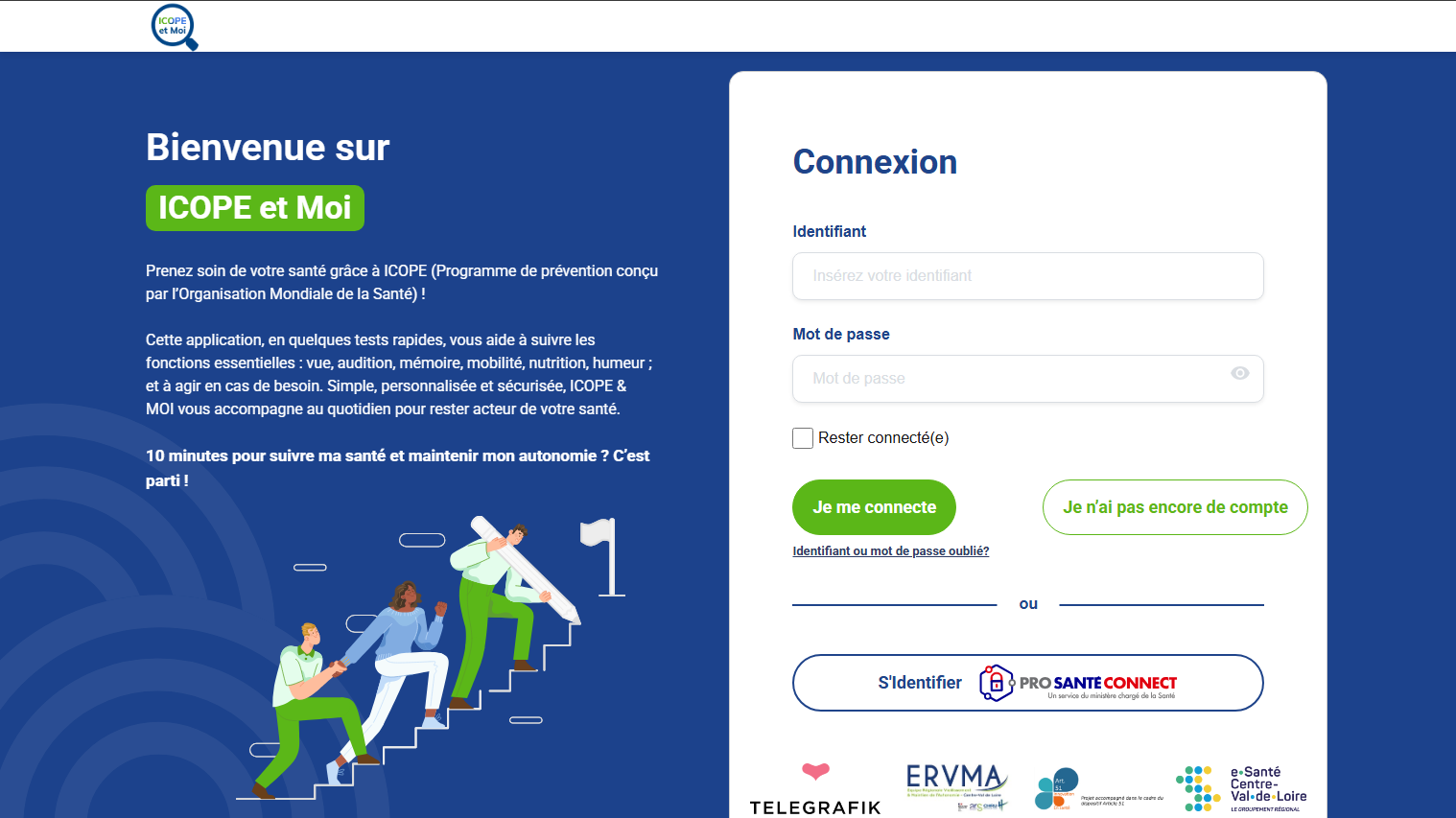
Access ICOPE & Moi

ICOPE: A structured framework to detect early

Developed by the WHO, ICOPE is based on an early prevention approach focused on monitoring intrinsic capacities. It targets six key functions: mobility, nutrition, mental health, cognition, hearing, and vision.

On paper, the ambition is clear: detect earlier to act earlier.

But in practice, one key question remains: what happens after screening?

The real challenge is no longer testing, but what we do with it

Screening is essential. But it only has an impact if it is part of a broader process:

  • interpreting the results,
  • conducting further assessment when needed,
  • ensuring proper orientation,
  • providing ongoing support.

In other words, the success of ICOPE will not depend solely on the number of screenings performed. It will depend on the ability of territories and professionals to turn early signals into concrete action.

This is where real-world challenges become most visible:

  • individuals completing screenings without knowing what to do next,
  • professionals lacking visibility on follow-up actions,
  • organizations struggling to coordinate health, social, and medico-social sectors,
  • vulnerable populations or those less comfortable with digital tools being left behind.

The issue is therefore not just about deploying a screening tool.
It is about making prevention understandable, actionable, and sustainable.

Digital tools can help if they simplify

Digital solutions are not meant to add complexity. On the contrary, they should make prevention more accessible and more operational.

An effective digital prevention tool should at least:

  • facilitate access to screening,
  • maintain a history of assessments,
  • make information accessible to the right professionals,
  • support continuity between self-assessment, support, and follow-up.

In other words, the right tool is not just the one that asks the right questions.
It is the one that connects screening, monitoring, and support.

ICOPE & Moi: from individual screening to supported follow-up

This is precisely the approach behind ICOPE & Moi, the application developed by Telegrafik.

The tool enables users to carry out a simple self-assessment and track the evolution of their capacities over time. This first step is valuable, as it lowers the barrier to entering a prevention pathway.

However, a recent evolution significantly strengthens its role.

The platform is now open to healthcare professionals, allowing them to:

  • access and monitor user records,
  • perform proxy assessments (hetero-assessments),
  • support users in completing evaluations.

Until now, these processes largely relied on user autonomy, which could be a barrier for more dependent individuals or those less comfortable with digital tools.

This marks a key shift.

We are no longer talking about an application used individually.
We are talking about a tool that can support shared and guided prevention.

What this changes in practice

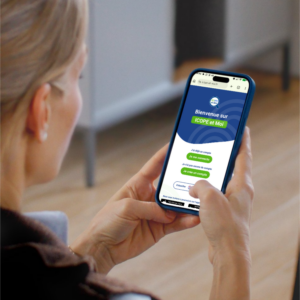
Woman holding a smartphone with the ICOPE & MOI app open

This evolution brings several concrete benefits.

First, it makes prevention more accessible to populations who might otherwise be excluded.

Second, it enables professionals to be involved earlier. Instead of intervening after the fact, they can monitor, guide, and better understand each situation.

Finally, it strengthens continuity in the care pathway. Screening is no longer an isolated action; it becomes a meaningful entry point into a structured prevention process.


This is a major shift, because in prevention, what matters is not just the test — it is the ability to organize what comes next.

A positioning aligned with Telegrafik’s vision

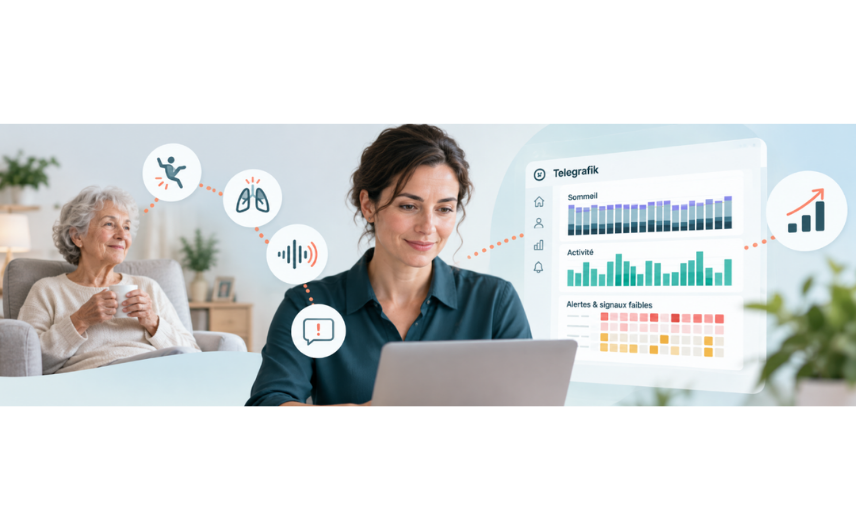
This evolution is consistent with Telegrafik’s broader positioning: connecting tools, data, and stakeholders to support prevention, coordination, and decision-making for care professionals.

This approach is also reflected in the integration of ICOPE & Moi into Mon Espace Santé, announced by Telegrafik in 2025.

This highlights an important point: the challenge is not just about applications. It is about integrating screening into a broader ecosystem of monitoring and support.

What will truly determine ICOPE’s success

The framework is now in place. Tools are evolving. Practices are beginning to take shape.

The real test in the coming months will not be to prove that ICOPE is useful,
but to ensure it becomes, across all territories, a simple, coordinated, and truly operational reflex.

Because in the prevention of loss of autonomy, screening is only the first step.

The real value lies in what follows: assessment, orientation, support  and the collective ability to ensure that no early signal remains without action.

Articles similaires