
And yet, connected solutions are still often thought out solely at the time of their installation.
Should we then define all the equipment a person might need right from the start? Or should we build a system capable of evolving with them?
For home care stakeholders, particularly Regional Resource Centers (CRTs), the challenge is twofold: offering the right level of support today, while retaining the ability to adapt it tomorrow.
At Home, Needs Are Neither Uniform Nor Definitive
Two people of the same age with a comparable level of autonomy will not necessarily need the same support.
For one person, the priority might be fall prevention. For another, the focus could be on sleep patterns or nighttime activity. For a third, it may be more about tracking daily activity trends or ensuring their safety when going outside.
The solution must therefore be based on the individual’s specific situation, their environment, and the risks identified by professionals.
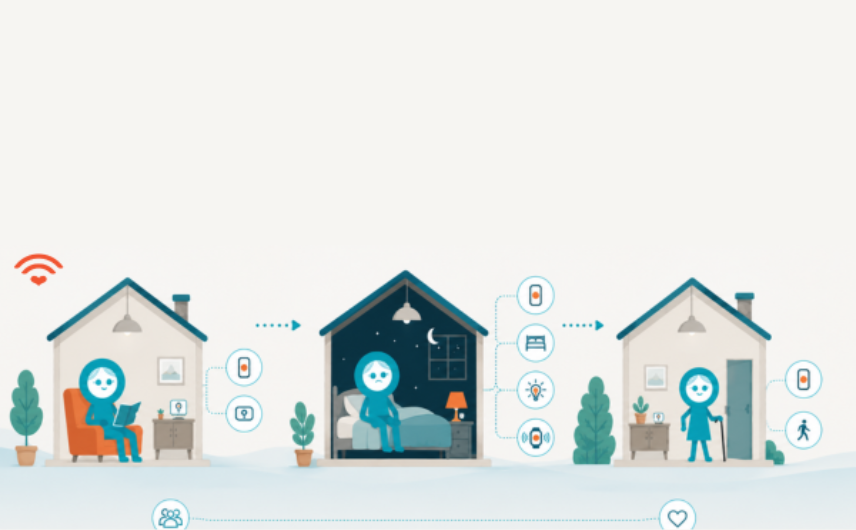
However, this initial assessment is not enough. A few months later, a hospitalization, a new frailty, or an improvement in independence can shift these priorities.
Therefore, the question is not just, « What does this person need today? » but also, « Will we be able to adapt their care tomorrow? »
The Right Equipment Isn’t Necessarily the Most Comprehensive
When faced with situations that are likely to change, it can be tempting to anticipate risks by installing as much equipment as possible right from the start.
But providing more equipment does not necessarily mean providing better care.
Instead, the challenge lies in finding the right level of response at any given moment: comprehensive enough to meet identified needs, but flexible enough to evolve.
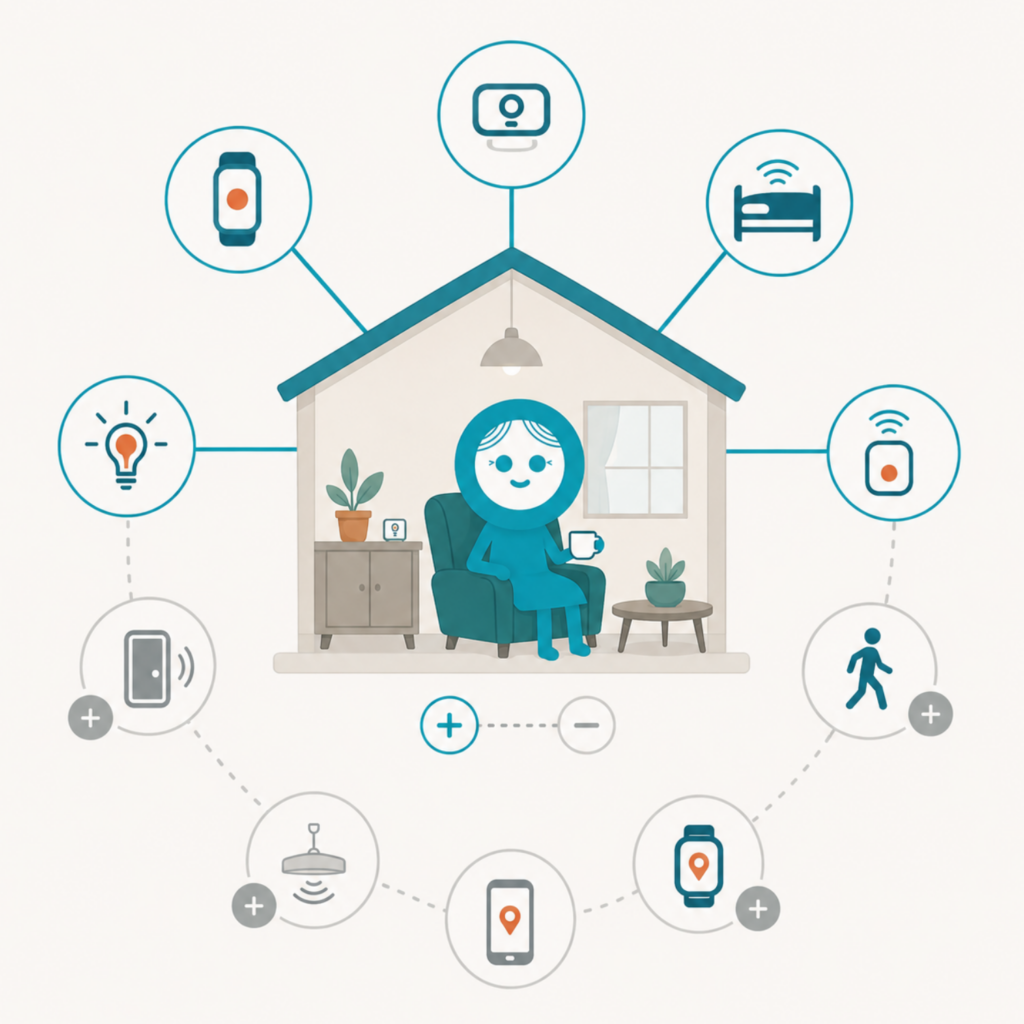
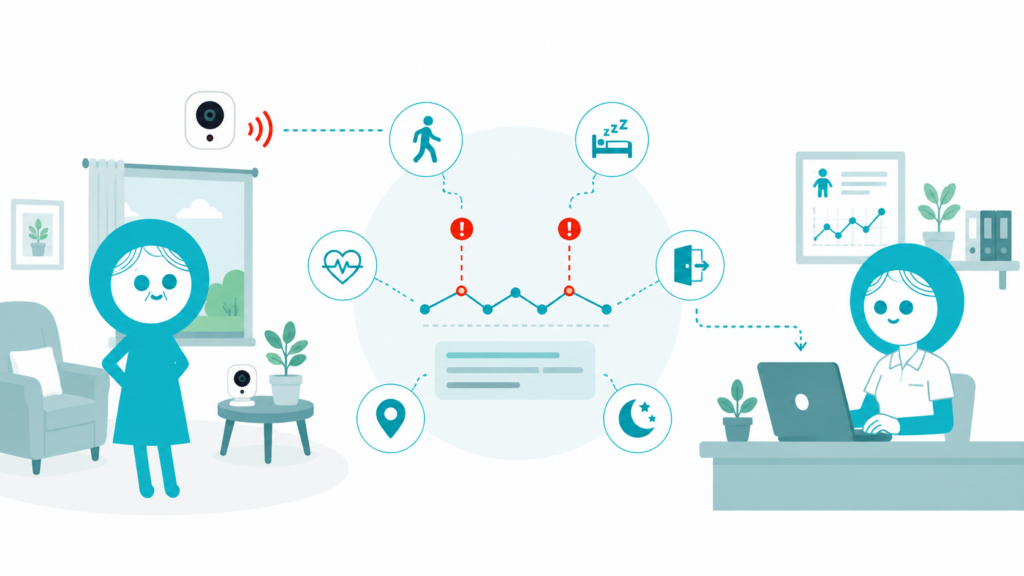
This is exactly the approach taken with OTONO-ME, Telegrafik’s remote monitoring solution. Depending on the situation, various devices can be combined to address needs such as safety, activity analysis, sleep tracking, monitoring outdoor excursions, or checking specific vitals.
A setup can thus be expanded when a new need arises. Conversely, equipment that is no longer relevant can be removed.
This modularity allows us to move away from a standard “one-size-fits-all” package, favoring a tailored system built around the individual.
The technological choice comes after the needs analysis, not the other way around.
Adapting Care Means First Detecting What Changes
This distinction is essential.
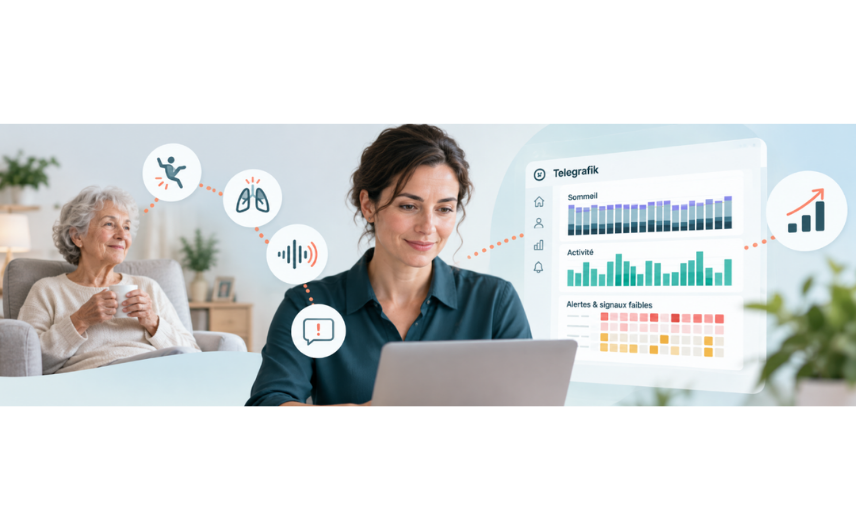
More frequent nighttime awakenings can have multiple explanations. The same goes for a decrease in activity. Technology alone cannot determine what these changes mean for a specific person.
It can, however, provide objective evidence of them.
It is then up to the professional to cross-reference this information with what they know about the beneficiary: their general health, their treatments, observations made during home visits, reports from other caregivers, or feedback from their loved ones.
The data thus becomes one factor among many used to decide whether it is necessary to investigate the situation further or adapt the care plan.
Therefore, technology does not replace professional expertise. It provides them with a complementary view of what happens between visits.
For CRTs, the Challenge is Also Sharing the Right Information
This approach takes on an additional dimension within the operations of a CRT.
A person receiving care at home may be surrounded by a care coordinator, a home support service, healthcare professionals, family caregivers, or even a telecare operator. Each holds a piece of the information necessary to understand their situation.
The ability to detect a change therefore only has real value if the relevant information can be integrated into the teams’ workflows and combined with other available elements.
This is why technological modularity cannot be separated from the challenges of coordination and interoperability.
The Telegrafik platform is built on this logic: allowing professionals to access the information they need and facilitating its integration with the tools and organizations already in place.
To discover in practical terms how a CRT coordinates digital tools, remote monitoring, and team organization, the replay of our webinar dedicated to the digital uses of CRTs is available in the Telegrafik resources section.
Shifting from Equipping the Home to Supporting the Life Journey
Ultimately, the question is not how many sensors should be installed in a person’s home.
The real question is whether the solution in place is suited to their situation today and can evolve when their needs change.
This requires the ability to choose relevant devices, detect shifts in daily habits, and provide professionals with the information they need to decide on any necessary adjustments.
We are no longer just thinking in terms of equipping a home, but of supporting a life journey.
Technology should not freeze the care process. It must enable it to evolve alongside the person.